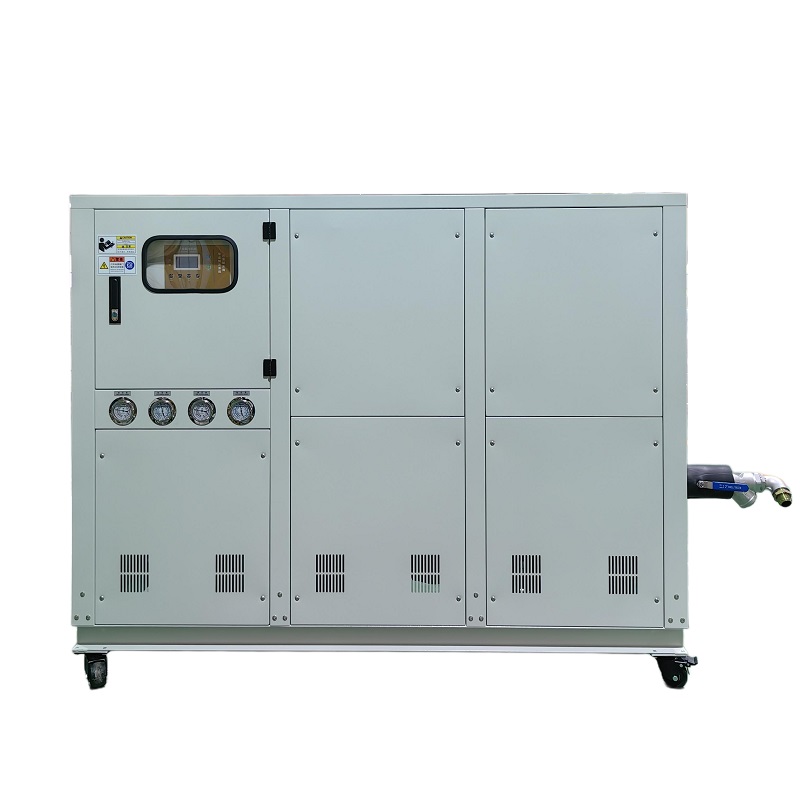
Applications of printing-specific chillers (covering three main areas: roller cooling, printing processes, and UV curing stages)
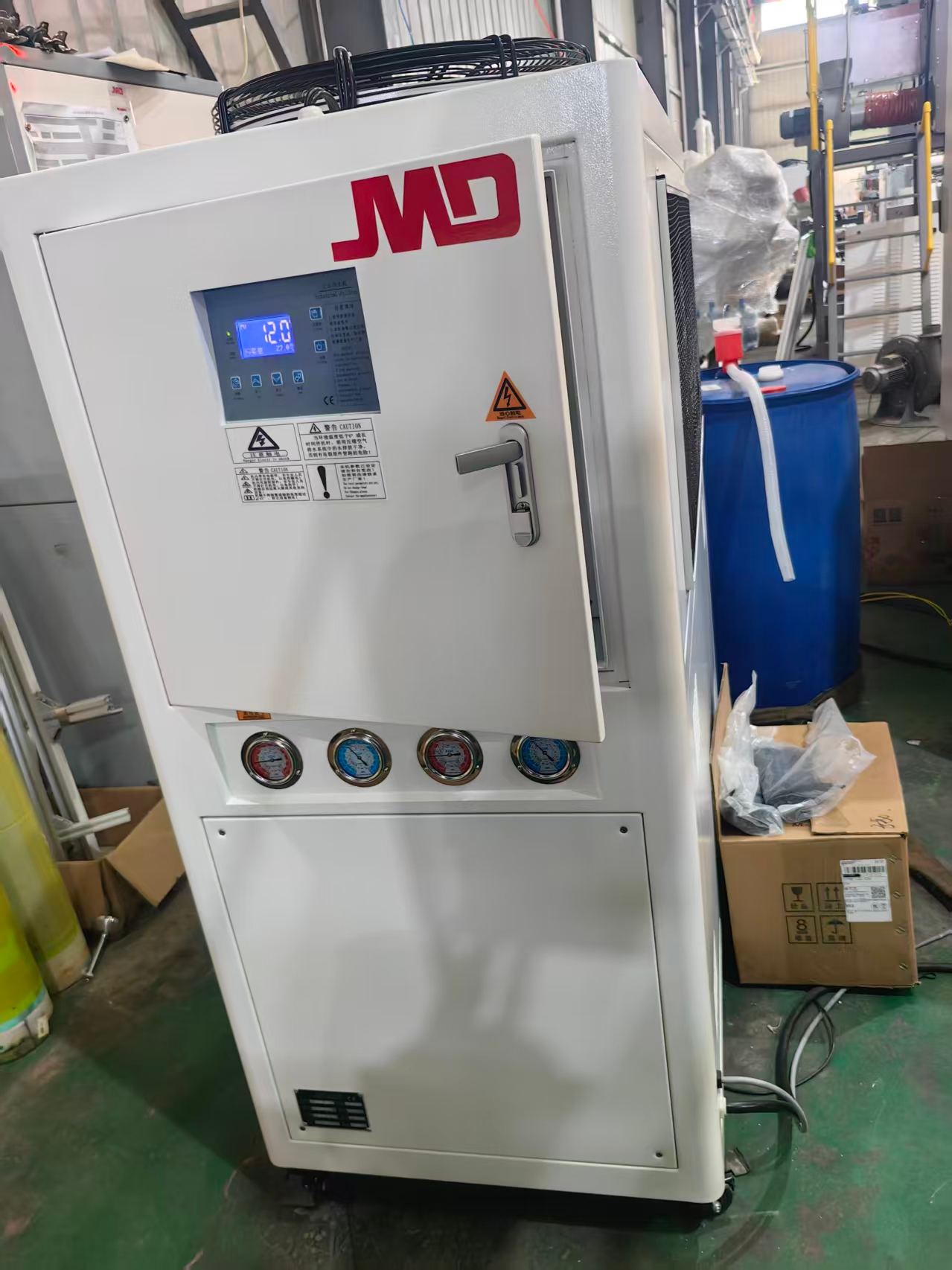
I. Core cooling points for individual printing presses (primary chiller loads), categorized into four main types:
1. Specialized for Flexo and Offset Printing: Fountain Solution Cooling (Roller Cooling)
Temperature Control Standard: Stable 10–15°C; precision of ±0.5°C or ±1.0°C.
Function: Maintains ink-water balance, reduces IPA (isopropyl alcohol) evaporation, and minimizes issues such as dirty plates, plate clogging, and dot gain; essential for high-speed multi-color offset and sheet-fed/web offset printing, fully matching the temperature control demands of industrial printing chiller for commercial printing scenarios.
2. All Printing Models: Constant-Temperature Roller Cooling
Plate cylinders, blanket cylinders, impression rollers, anilox rollers, and cooling rollers generate continuous heat due to high-speed friction; a temperature difference of just 1°C can cause paper or film expansion/contraction, registration errors, and color variations.
Temperature Control: 20–25°C closed-loop water circulation. Addresses issues like registration inaccuracy, ghosting, uneven ink layer thickness, and film stretching/wrinkling. Suitable for: Offset, gravure, flexo, and self-adhesive label presses, serving as the core cooling module of universal printing machine water chiller.
3. UV Printing Water Cooling (Mainstream for High-End Packaging)
UV mercury lamps and LED curing lamps generate immense heat; without water cooling, lamp lifespan degrades rapidly, and materials like film, PVC, or gold/silver cardstock can be scorched.
The chiller circulates cooling fluid to UV lamp housings and delivery-end cooling rollers, keeping the printed surface temperature at ≤45°C (or lower).
Results: Prevents paper curling and shrinkage, ensures uniform varnish curing, and extends UV lamp lifespan by over 30%, which is the key functional advantage of professional UV curing chiller in high-end packaging printing.
4. Ink Circulation System Cooling (Essential for Gravure/Flexo)
Ink viscosity decreases as temperature rises, leading to ink misting, missed printing, and color inconsistencies; the chiller maintains the ink reservoir at a constant 18–22°C.
Suitable for: Plastic film gravure printing, food packaging, and label flexo production lines.
II. Applications Categorized by Printing Process
1. Offset Printing (Commercial color printing, books/periodicals, gift boxes)
Core requirements: Fountain solution chillers + dual-circuit chillers for roller cooling.
Applications: 4-color and 8-color sheet-fed offset presses, commercial web presses for books/periodicals, and color box printing presses.
2. Gravure Printing (Film packaging, plastic bags, aluminum foil)
Cooling points: Ink circulation cooling rollers, post-drying product cooling rollers, and auxiliary oven cooling.
Solves issues such as heat-induced film shrinkage, blistering during lamination, and batch-to-batch color inconsistency.
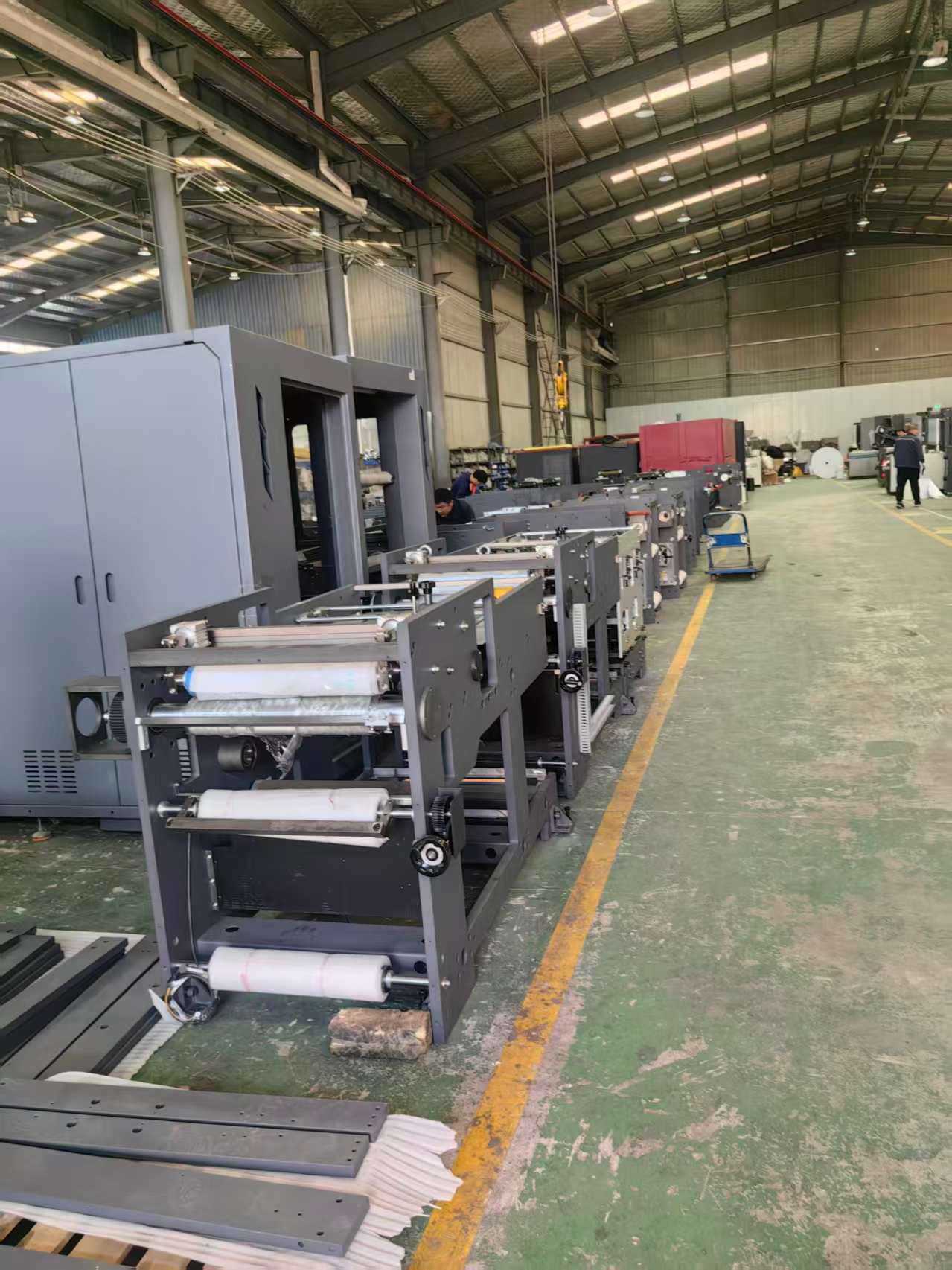
3. Flexographic Printing/Self-adhesive Labels (Stickers, personal care product labels, pre-printed cartons)
Addresses continuous heat generation in anilox rollers on high-speed narrow-web label presses; utilizes compact or large air-cooled chillers for convenient, close-proximity connection, ensuring precise pattern registration.
4. UV Coating, Lamination, and Composite Processes
Constant-temperature cooling for lamination and coating rollers ensures uniform application of varnish and adhesive, preventing lamination delamination, surface tackiness, and gloss fluctuations.
Air-cooled chillers require pump assemblies capable of high flow rates and high lift; 10% ethylene glycol may be added for freeze protection, particularly during winter operation.








 Get a Quote
 Product categories