Many factory owners and equipment managers harbor a misconception: that standard industrial chillers are suitable for all weather conditions. In reality, however, most standard chillers are designed for conventional environments with temperatures around 35°C. During the peak of summer—or in scenarios involving poor workshop ventilation or outdoor operations—ambient temperatures can easily soar to 40°C–50°C. Under these conditions, standard units often suffer from reduced cooling performance, frequent alarms, and even shutdowns, all while energy consumption spikes. In contrast, industrial chillers designed for high-temperature, harsh environments are purpose-built for such conditions. While they may appear to require a higher initial investment, they actually help factories significantly lower overall production costs by ensuring stable operations, maintaining product quality, reducing maintenance needs, and cutting energy expenses.
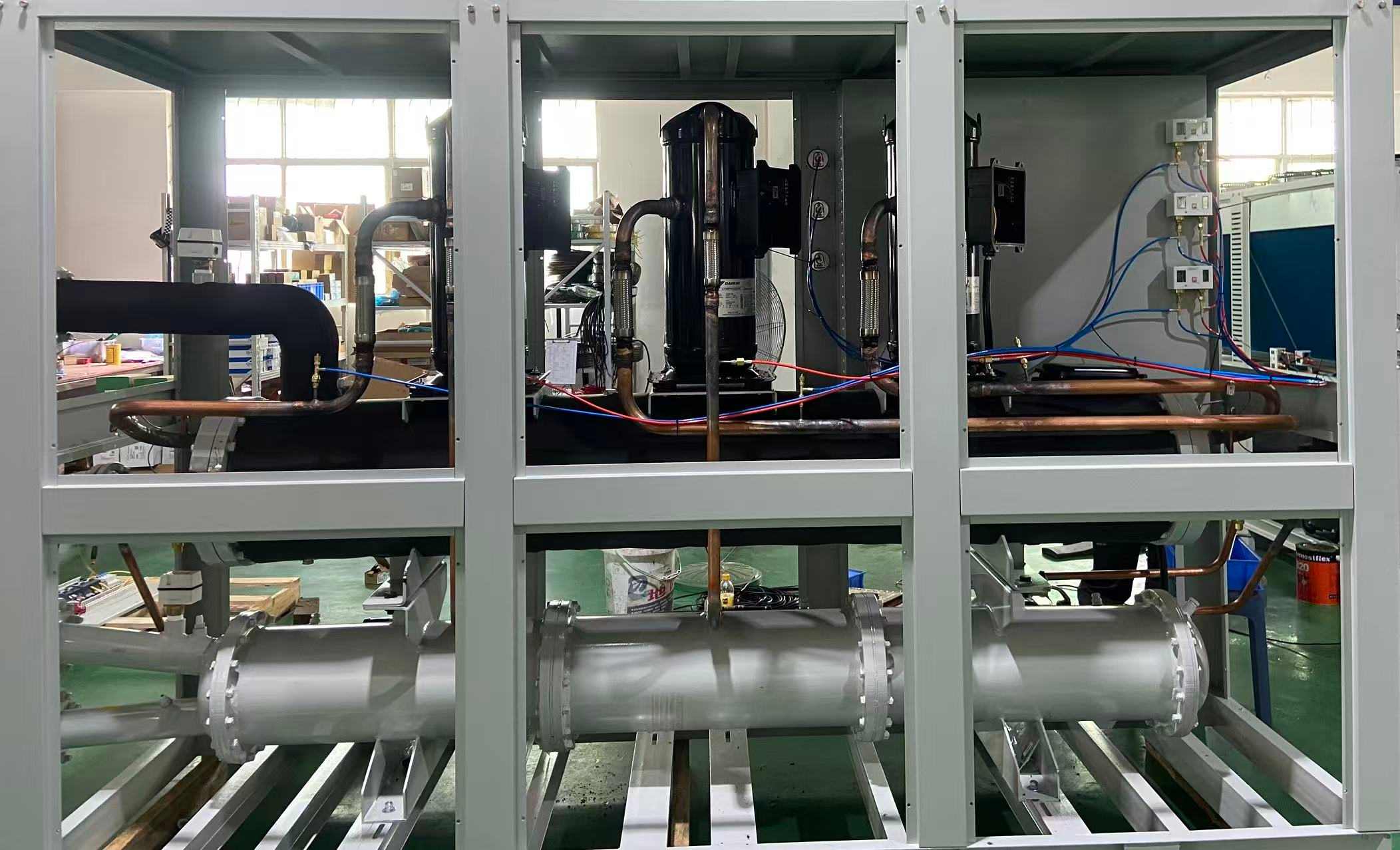
First, these units effectively prevent the hidden losses associated with unexpected production stoppages.
Industries such as injection molding, metal casting, chemical processing, and food processing rely heavily on continuous cooling. Standard chillers frequently trigger high-pressure protection and shut down automatically during hot weather; even brief interruptions can lead to wasted labor, delayed orders, and material waste during restarts—costs that add up quickly. Specialized high-temperature chillers, however, feature oversized condensers and durable compressors. They operate smoothly without tripping breakers, even under intense heat and stifling conditions, ensuring uninterrupted production and naturally lowering the fixed production cost per unit.
Second, they accelerate production and boost capacity, leading to indirect cost savings.
As the weather heats up, the cooling efficiency of standard chillers drops, resulting in slow mold cooling, prolonged material cooling times, and reduced reaction efficiency. Workers are forced to slow down, severely dragging down overall productivity. Yiyun Refrigeration’s optimized, high-temperature-specific air-cooled chillers thrive in hot environments; they offer precise temperature control and stable heat exchange rates, maintaining a consistent production pace. With higher output achieved in the same timeframe, fixed costs—such as labor, facility overhead, and equipment depreciation—are spread across more units, significantly reducing the overall cost per product.
Stable cooling performance also drastically reduces the number of defective products and minimizes material waste.
As the majority of production defects are linked to unstable cooling temperatures. Standard chillers often struggle with temperature fluctuations in high-temperature environments, leading to issues such as plastic product deformation or shrinkage, food spoilage, and inconsistent quality in chemical products—all of which result in significant waste. In contrast, specialized high-temperature chillers provide uniform cooling and stable temperature control, ensuring consistent cooling results across batches. This significantly boosts the yield rate, minimizes raw material waste at the source, and makes production cost control effortless.
Furthermore, these units reduce equipment breakdowns as well as maintenance and electricity costs.
High-temperature environments force standard chiller compressors to operate under overload conditions; prolonged high-pressure operation accelerates component aging and increases the risk of burnout, leading to exorbitant repair and replacement expenses. Additionally, standard units experience a sharp spike in power consumption under high-temperature conditions, placing a heavy burden on electricity costs. E-Yun Refrigeration’s specialized high-temperature chillers feature structural optimizations and upgraded electronic controls that ensure stable operating pressures and enhanced durability of core components, thereby lowering maintenance costs. Equipped with high-efficiency heat exchange and energy-saving variable-frequency technology, they maintain energy-efficient operation even in high-temperature conditions, helping factories cut electricity costs over the long term.

 Get a Quote