In factory temperature control, commercial air conditioning, or precision cooling scenarios, choosing the right chiller directly determines energy consumption and maintenance costs. Many people only focus on price, neglecting the most fundamental difference—the core difference lies in the condenser heat exchange method. Air-cooled models rely on forced air convection for heat dissipation, while water-cooled models rely on circulating cooling water to remove heat. This fundamental difference leads to drastically different performance characteristics in energy efficiency, installation, and maintenance. Understanding this will help you avoid at least 80% of selection errors.
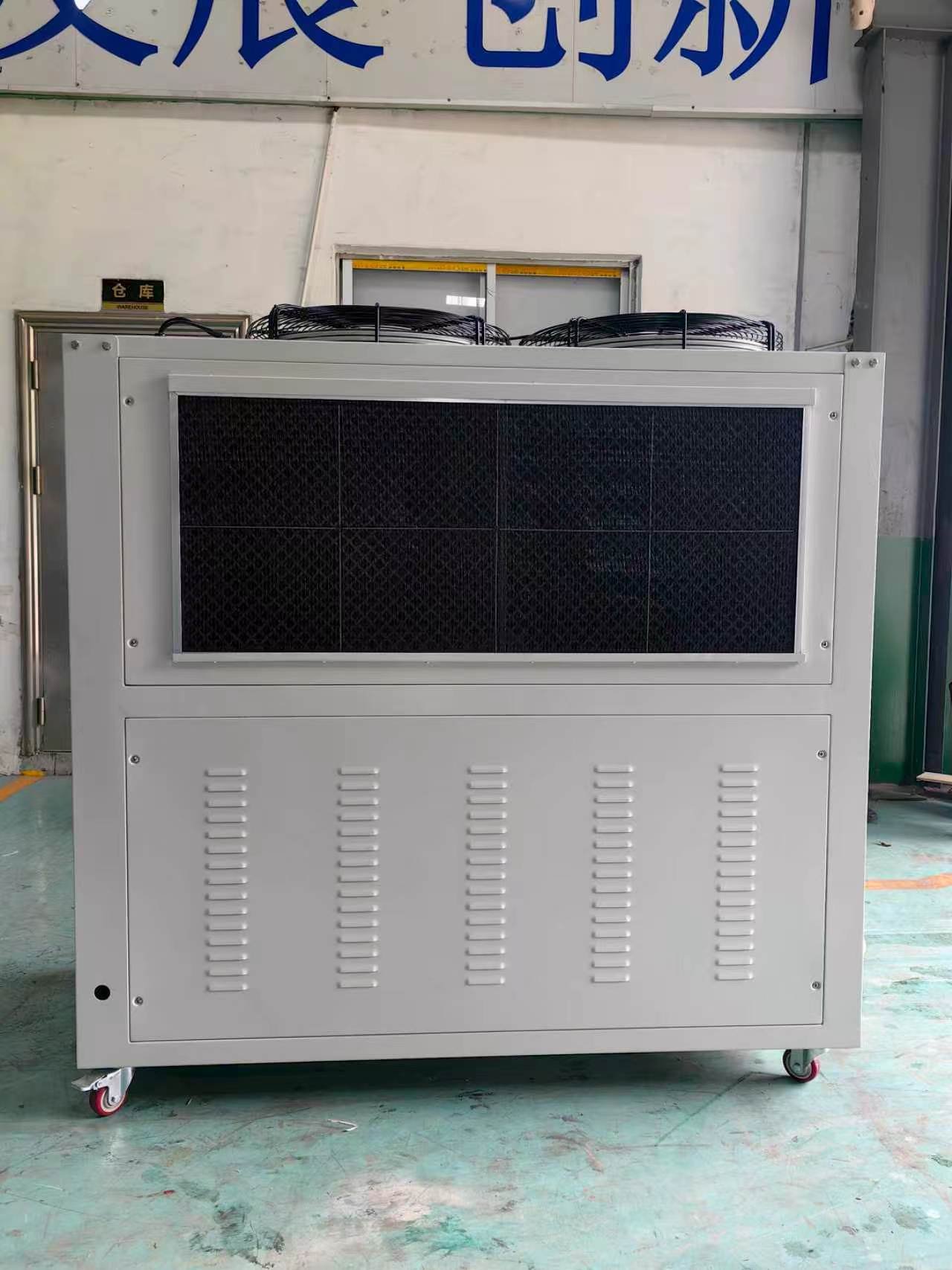
From an operational energy efficiency perspective, water-cooled chillers, with their lower condensing temperatures, typically have a COP value 25% to 40% higher than air-cooled chillers, resulting in considerable annual electricity savings. However, they require a cooling tower and water pump, and cooling water evaporation losses are significant. Conversely, air-cooled chillers consume almost no water, require no external water tower during installation, and are plug-and-play, making them ideal for areas with water scarcity or high water hardness. However, the energy efficiency of air-cooled units is significantly affected by ambient temperature, with a noticeable decrease in cooling capacity during the high temperatures of summer. Water-cooled units, on the other hand, operate more stably and are suitable for year-round, uninterrupted production.
In terms of installation and maintenance, air-cooled models utilize a modular, integrated structure, allowing for outdoor placement on rooftops or in open spaces. Routine maintenance only requires cleaning dust from the fins, making it extremely simple. Water-cooled systems, however, require dedicated machine rooms, cooling towers, and complex piping, resulting in higher initial construction costs. Furthermore, regular treatment of scale and algae, as well as valve maintenance, is necessary, demanding a higher level of expertise from the maintenance team. Therefore, selecting an industrial chiller cannot solely rely on the price of the main unit; the total lifecycle costs, including auxiliary materials, water and electricity consumption, and labor maintenance, must be comprehensively calculated to determine the overall cost.
So, how do you choose? Remember these three ironclad rules: For scenarios with small cooling capacity, water shortage, and limited space, prioritize air-cooled chillers; for large cooling capacity, year-round high-load operation, and the availability of a cooling circulation system, water-cooled chillers are more cost-effective; if you are still undecided, please conduct a detailed investment payback period calculation based on your factory area, local electricity prices, and water costs.

 Get a Quote