In chemical production, temperature control is critical not only for product quality but also directly impacts operational safety. Since the chemical industry frequently deals with flammable, volatile, and corrosive raw materials, standard chillers often fail to meet the requirements for safe and stable operation.
Consequently, an increasing number of chemical enterprises are opting for low-temperature explosion-proof chillers. These units provide a reliable cooling source for reaction vessels, distillation equipment, reaction systems, and production lines through precise temperature control, explosion-proof design, and stable cooling capabilities.
So, why is it essential for the chemical industry to use low-temperature explosion-proof chillers? How do they differ from standard industrial chillers? This article provides a detailed analysis across five aspects: equipment types, functional features, operational efficiency, maintenance, and service life.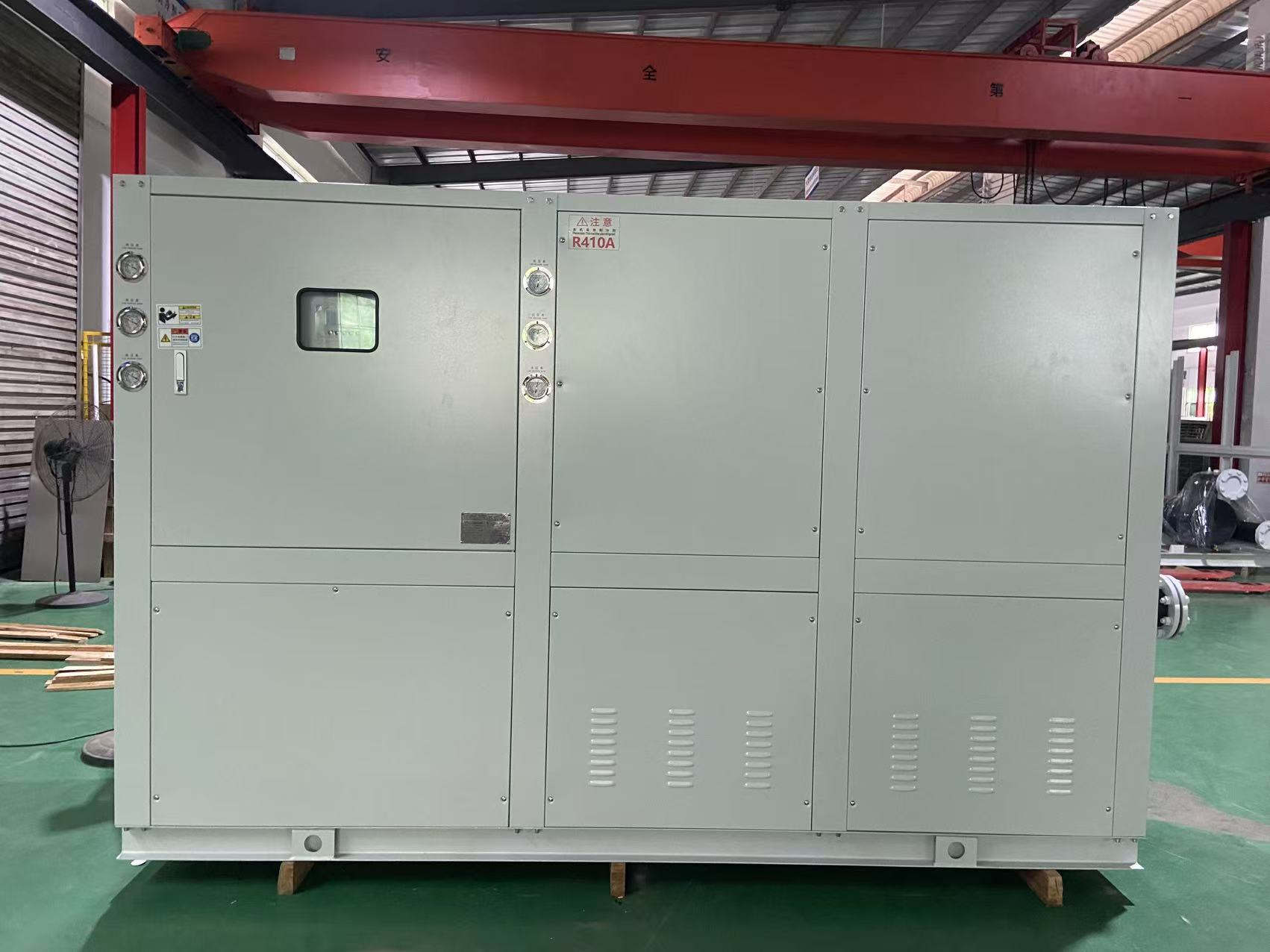
I. Why does the chemical industry need low-temperature explosion-proof chillers?
Chemical production is characterized by strict temperature requirements, the handling of flammable and explosive raw materials, long continuous production cycles, and a high demand for equipment stability. For instance, reactions involving organic solvents can generate significant heat; polymerization reactions require precise temperature control; distillation processes necessitate continuous cooling; and the production of pharmaceutical intermediates often requires low-temperature environments. If the cooling system fails to dissipate heat effectively, it can lead to runaway reaction rates, reduced product purity, increased equipment pressure, and safety accidents.
Practical experience in chemical production shows that many reaction processes require temperature control within the range of -10°C to 10°C (or even lower). Standard chillers typically supply chilled water at around 7°C, making them unsuitable for certain specialized processes.
This is a key reason why the chemical industry must utilize low-temperature explosion-proof chillers.
II. What types of low-temperature explosion-proof chillers are available?
Based on cooling methods and application requirements, the low-temperature explosion-proof chillers commonly used in the chemical industry fall into the following categories:
1. Water-cooled low-temperature explosion-proof chillers
Water-cooled units dissipate heat from the condenser using cooling water.
Key components: Explosion-proof compressor, evaporator, condenser, water pump system, and explosion-proof control cabinet.
Advantages: High cooling efficiency; stable operation; suitable for long-term operation in large chemical plants.
Typical applications: Cooling chemical reaction vessels; pharmaceutical production lines; fine chemical processing equipment. Due to lower condensing temperatures, water-cooled systems typically offer superior energy efficiency in large-scale industrial environments.
2. Air-cooled low-temperature explosion-proof chiller
Air-cooled units dissipate heat using ambient air.
Characteristics:
Advantages: Simple installation; no cooling tower required; compact footprint.
Disadvantages: Significantly affected by ambient temperature; efficiency drops markedly in high-temperature environments.
Suitable for: Small-to-medium chemical workshops; outdoor installations; production lines with moderate cooling demands.
3. Screw-type low-temperature explosion-proof chiller
Screw-type units utilize twin-screw compressors.
Characteristics: High cooling capacity per unit; capable of continuous 24-hour operation; strong load regulation capabilities.
Typically used in: Large chemical plants; continuous reaction production lines; high-load cooling systems.
4. Scroll-type low-temperature explosion-proof chiller
Scroll compressors feature a simple structure and low operating noise.
Suitable for: Experimental chemical equipment; small production lines; applications requiring precise temperature control.
Advantages: Easy maintenance; high temperature control precision; stable operation.
III. What are the core functions of low-temperature explosion-proof chillers?
While standard chillers primarily address cooling needs, low-temperature explosion-proof chillers must simultaneously meet three core requirements:
Low-temperature control + Explosion-proof safety + Long-duration operation.
1. Precise low-temperature control function
Many stages of chemical production require minimal temperature fluctuation.
For example, certain reactions require: temperature control precision of ±1°C; a cooling environment below -20°C; and stable, long-term operation.
Low-temperature chillers ensure stable production temperatures through: intelligent PID control; high-precision temperature sensors; and automatic cooling capacity adjustment.
2. Explosion-proof safety function
Chemical workshops may contain combustible gases, organic solvent vapors, or explosive dust.
Therefore, the equipment must comply with explosion-proof standards.
Explosion-proof chillers typically incorporate explosion-proof motors, electrical control boxes, wiring components, and compressor configurations.
This minimizes the risk of accidents caused by electrical sparks.
3. Continuous operation function
Chemical production processes typically do not involve frequent shutdowns.
High-quality low-temperature explosion-proof chillers are designed for: 16–24 hours of daily operation and over 300 days of operation per year. Therefore, the equipment must feature:
A highly reliable compressor, a stable oil circulation system, and automatic protection functions.
IV. Performance Analysis of Low-Temperature Explosion-Proof Chillers
When selecting equipment, enterprises are primarily concerned with:
"Do low-temperature explosion-proof chillers consume more electricity?"
In reality, high-quality equipment with optimized designs can reduce long-term operating costs.
1. Higher refrigeration efficiency
In low-temperature environments, the efficiency of standard chillers drops significantly.
Low-temperature explosion-proof chillers utilize large-capacity heat exchangers, optimized refrigeration systems, and high-efficiency compressors,
enabling them to maintain stable cooling capacity.
For example:
When delivering the same 100 kW of cooling capacity, a high-efficiency industrial chiller typically achieves a COP (Coefficient of Performance) of around 3.0 to 5.0.
A higher COP means:
More cooling output is generated for every 1 kW of electricity consumed.
2. Stable temperatures reduce production losses
In chemical manufacturing:
Temperature fluctuations can lead to product rejection, reaction failure, and raw material waste.
Stable low-temperature control can improve product consistency, reduce production risks, and increase equipment utilization rates.
3. Savings on long-term operating costs
Although the initial investment for low-temperature explosion-proof chillers is higher than for standard chillers, in the long run:
They reduce downtime for repairs, product losses, and energy waste. For enterprises with continuous production processes, the overall cost is lower.
V. How should chemical enterprises select a low-temperature explosion-proof chiller?
When selecting equipment, consider the following:
1. Cooling temperature requirements
For example: Above 5°C—standard chillers may suffice;
-5°C to -20°C—low-temperature chillers are required;
Below -20°C—specialized low-temperature refrigeration solutions are needed.
2. Cooling capacity requirements
Calculate the required cooling capacity based on:
Reactor size, production speed, and heat generation.
Do not base the decision solely on equipment price.
3. Explosion-proof rating requirements
Select the appropriate explosion-proof rating based on the production area's flammable gas classification, chemical properties, and safety regulations.
Summary: Why must the chemical industry use low-temperature explosion-proof chillers?
Low-temperature explosion-proof chillers are essential safety equipment in chemical production, not merely ordinary auxiliary devices. For small- to medium-scale chemical production, scroll-type explosion-proof low-temperature chillers are a suitable choice; for large-scale continuous production enterprises, screw-type explosion-proof low-temperature chillers are recommended.
As the chemical industry continues to raise its standards for operational safety, energy conservation, and environmental protection, explosion-proof low-temperature chillers—including specialized chemical-grade and industrial models—will become increasingly important equipment for enterprises seeking to enhance production efficiency.

 Get a Quote